
Lyme disease therapies
Do you have unusual medical symptoms and feel unwell?
Do you suffer from chronic joint pain, severe headaches, tingling, numbness, burning, fatigue (despite a good night’s sleep), lack of strength and much more?
Get tested for Lyme disease and co-infections with a bioresonance!
We have the latest test in Poland for 189 pathogens (29 types of Lyme disease and 160 co-infections).
In Bicomedica clinic we treat Lyme disease with:
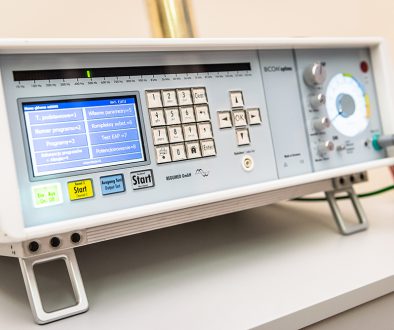
Bioresonance Bicom Optima and Trikombin therapies.Therapies last 1,5 H, 2,5 H, and 3,5 H. All therapies are performed with detoxification of internal excretory organs (kidneys, liver, pancreas, lungs). Additionally, saliva, urine or blood is added as needed to enhance the therapy. We are the only clinic in Poland where an attention to stem cell renewal, mitochondria and mast cells renewal is paid. Nobody in Poland does that.
- Intravenous infusions of ozone drips and Alfalipone acid, vitamin C
- Vitamin B injections
- Supplements – selected and tested for good absorption with a bioresonance
- therapies on the VIOFOR mat with a variable magnetic field https://www.medandlife.com/wplyw-zmiennego-pola-magnetycznego-na-zmeczenie-i-wybrane-aspekty-jakosci-zycia-chorych-ze-stwardnieniem-rozsianym/
Lyme disease and tick-borne diseases
Lyme disease, a bacterial disease caused by the spirochete Borrelia Burgdorferi, is transmitted to humans through the bite of an infected tick. Many problems are usually associated with the disease, such as co-infections with other pathogens, endocrine disruption, immune system dysregulation, and others. The incidence of Lyme disease is now reaching alarming proportions and we can already speak of an epidemic.
SYMPTOMS
- If a tick bite causes erythema, it means that the tick has infected you with Lyme disease. Unfortunately, it occurs in only a few patients. This is the only evidence that infection has occurred.
- In the first stage of the disease, flu-like symptoms may appear.
- There are more and more symptoms as the disease progresses.
The following are the most common symptoms according to Hoorowitz:
- fevers, sweats, chills, heat waves;
- fatigue, heaviness, weakness
- losing and gaining weight
- unexplained hair loss
- enlarged lymph nodes
- sore throat
- testicular and pelvic pains
- unexplained menstrual disorder
- unexplained galactorrhea and breast pain
- sensitive bladder and bladder dysfunction
- sexual dysfunction, decreased libido
- stomach upset, abdominal pains
- back and neck stiffness
- disorders of bowel movements (constipation, diarrhea)
- chest or rib pain
- shortness of breath or cough
- heart palpitation, irregular heartbeat
- heart murmur, mitral valve leaflet prolapse in medical history
- joint pain and swelling
- headaches
- numbness in the extremities or just the fingers;
- neck crackling, stiffness and neck pain;
- muscle aches and cramps;
- facial or other muscle tics;
- prickling, feeling needles under the skin, loss of sensation, burning, piercing pains;
- numbness of the tongue, especially the tip or lips;
- tremor
- double blurred vision, frequent black spots, sensitivity to light;
- ringing, earaches, sensitivity to sound;
- problems with focusing, reading, difficulty thinking, difficulty in finding words;
- poor short-term memory, memory gaps;
- paralysis of the facial nerves (drooping of the corner of the mouth)
- facial paralysis (Bell’s symptom)
- eyes/ double or blurred vision
- Tremor
- confusion, trouble with thinking
- difficulty with focusing and reading
- confusion, trouble with thinking
- forgetfulness, poor short-term memory
- disorientation: getting lost, going to the wrong place
- speech impediment
- mood swings: anxiety, depression, irritability
- increased symptoms of alcohol poisoning
- pain and burning of the feet and calves
Half of Lyme disease patients have no memory or association of erythema migrans or tick bites. Half of the patients have difficulty confirming the disease with commonly used serological tests (ELISA/EIA, Western Blot) in the first diagnostic approach. In other words, the disease cannot be ruled out because there is no erythema or because the patient does not remember the bite and the ELISA test is negative. Unfortunately, such a wrong approach to Lyme disease diagnostics is common today. For this reason, a large group of patients have problems with access to an appropriate and timely diagnosis. Many patients wait months or years for a diagnosis – an infectious disease that, in the meantime, progresses, attacks more organs and becomes extremely difficult to treat. Because of the hasty exclusion of Lyme disease, a large group of patients end up on false diagnostic paths and erroneous treatment paths, often with permanent health consequences. An ineffective approach to this disease costs money – and this is not only about the health of individual patients, but also about huge losses to the state budget and society as a whole. A large group of patients have difficult access to diagnosis because they do not meet the ELISA positivity criterion. These patients often fall into false diagnoses (such as MS, SLA, Parkinson’s disease, Alzheimer’s disease – to name the most serious ones). A large group of patients return to outpatient clinics and hospital wards due to ineffective treatment of Lyme disease – persistent symptoms or relapse. Co-infections are not routinely diagnosed in patients with Lyme disease – so how can you claim that they are “rare”? Practice, as far as physicians and laboratories performing extended diagnostics are concerned, shows a much more pessimistic picture – most patients with Lyme disease unfortunately have co-infections with other pathogens. Failure to take this into account in treatment is one of the reasons for treatment failure in Lyme disease.
Lyme disease is a disease caused by Borrelia spp. and is often associated with a wide range of co-infections that make diagnosis difficult. When inadequately treated, they cause very serious consequences.
The most common co-infections are,:
Bartonella – causes enlargement of lymph nodes and runs with fever, causes endocarditis and proliferative vascular disease
Babesia – its symptoms are similar to malaria (night sweats, fever, fatigue)
Anaplasma (Ehrlichia) coexists with tick-borne encephalitis
Chlamydia Pneumonia – causes atypical pneumonia
Jersiniosis Enterocolitica – develops with diarrhea and inflammation of mesenteric lymph nodes, causes arthritis
Mycoplasma Pneumonia – acute pneumonia
Brucellosis – fever, sweats, severe testicular pain, severe headache
Tularemia – fever, cough, severe sweating, severe weakness, diarrhea, may lead to septicemia
We recommend watching videos about Lyme disease on YouTube
Under Our Skin, about Lyme disease in the US https://www.youtube.com/watch?v=khUQMq-5UCU
Lyme Disease A Silent Epidemic, https://www.youtube.com/watch?v=poW6j2v17sA